
Hardware Park Biodesign Fellowship
Twelve months of paid, full-time medical device work with structured mentorship, leadership development, and a clear path forward. Based in Birmingham, Alabama.
Please note: This fellowship is open to any candidate who meets the requirements even if you don’t plan to pursue a career in a MedTech field. Biodesign experience is not required.
Annual salary
Month full-time Fellowship
Fellowship Positions Available
We assist early-stage medtech companies
Hardware Park is a 501(c)(3) nonprofit MedTech development center in Birmingham, Alabama, that helps inventors and clinicians determine if their ideas are worth building — and then connect them with product designers, engineers, and manufacturers to turn promising medical device ideas into real products. Our help begins in the stage where a clinical problem is real but the right solution isn’t obvious yet, and where testing, prototyping, and iterating are the only way to make progress. We do that work using the Stanford Biodesign process, a structured methodology developed for exactly this kind of problem.
The Biodesign Fellowship is part of our broader mission to grow the technical talent and infrastructure that make Birmingham a place where MedTech companies can start and succeed. Alabama produces strong STEM graduates, but too many of them leave — not because they want to, but because they can't find the right opportunity here. Throughout the Fellowship, we actively connect fellows with Alabama-based startups and industry employers. Our goal is that every fellow has full-time employment options in Alabama at the conclusion of the program.
What the Fellowship Looks Like
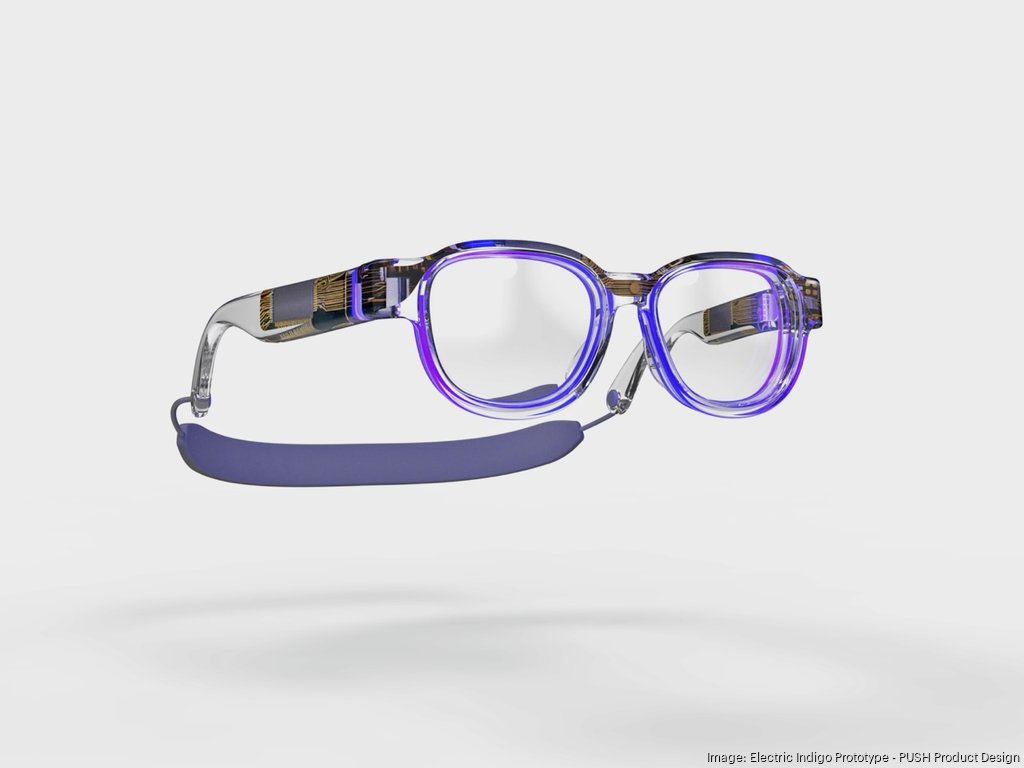
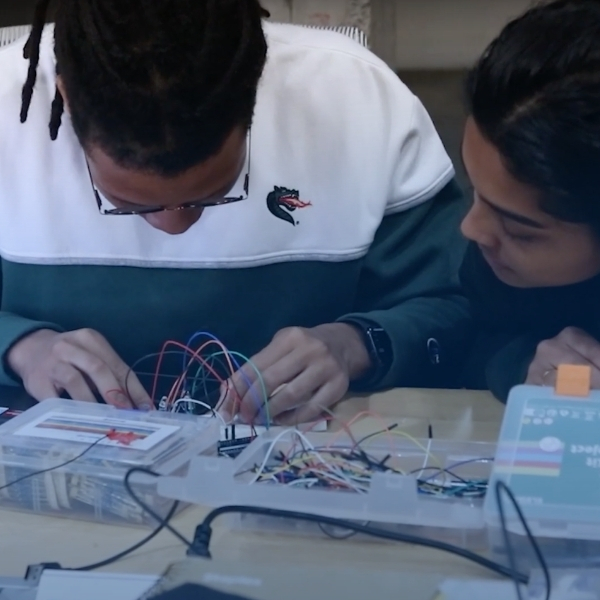
You will be part of Hardware Park’s internal design & engineering team, working on real medical device development projects for Hardware Park’s portfolio companies. These are not simulated projects or academic case studies; they’re genuine product development challenges —with stakes attached—for startups building devices intended to reach patients.
You'll learn and apply the Stanford Biodesign innovation process as the framework for your work, moving through needs finding, needs screening, concept generation, concept screening, strategy development, and implementation. The projects are real, the timelines are real, and the decisions you make will matter.
How the Fellowship Is Structured
While the context of the fellowship is MedTech device development, the program is designed to accelerate and document your growth across 13 high-demand competencies that are valuable in any industry. Intentional leadership development, regular seminars, milestone reviews, and coaching conversations provide frequent opportunities for both professional and personal growth.
You'll work directly with Hardware Park's Director of NextGen Programs, D.J. Strickland, and Director of Research and Development, Dr. Molly Buckley-Kotar. DJ is a licensed professional engineer whose career includes industry experience in regulated settings and engineering education. Molly holds degrees in mechanical engineering and biomedical engineering and has design and FDA 510(k) experience with a MedTech startup.
Our team
You won't navigate this year alone. You'll work daily alongside experienced practitioners who are invested in your growth as a designer/engineer/thinker.
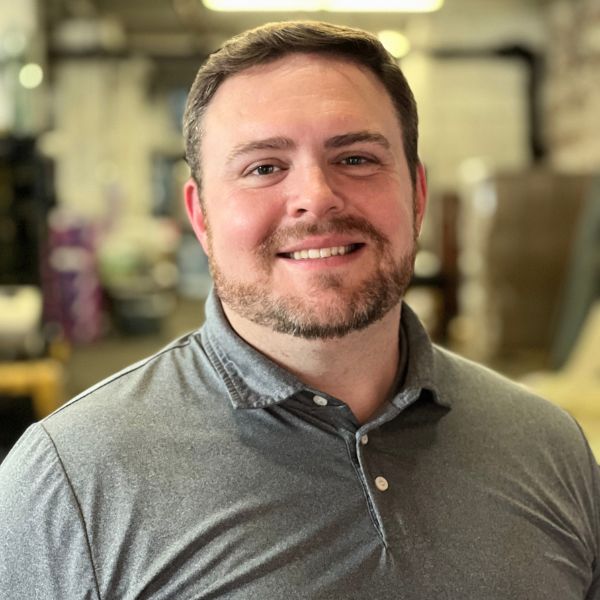
The person who knows your whole arc. DJ sees your development across the full year — helping you see where you have room to grow & track that growth and making sure the program is working in your interest at every stage.
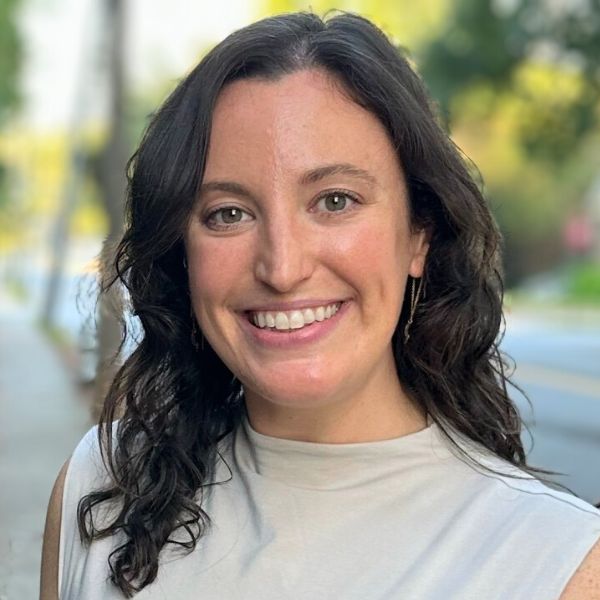
The person who works beside you every day. Molly brings deep technical expertise and genuine investment in your growth — the kind of guidance that only comes from someone who is in the work with you, not watching from a distance.
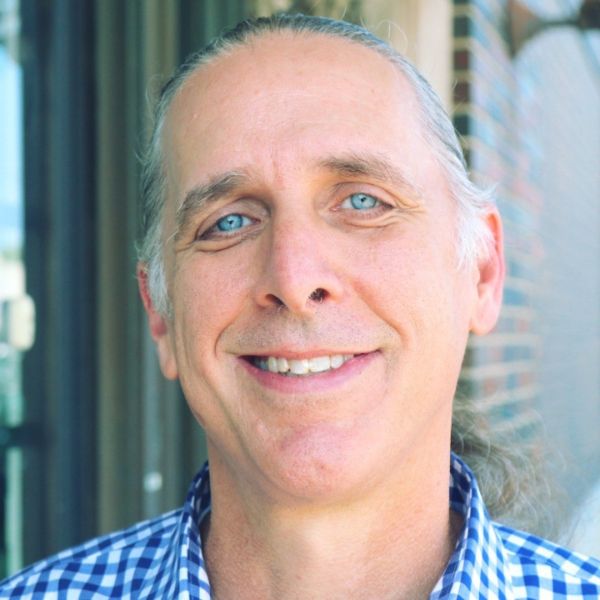
The person who speaks your name in the right rooms. Mark has spent years building relationships across Alabama's engineering and innovation communities, and he invests those relationships on your behalf — connecting you to the people and opportunities that shape what comes next.
We Help Fellows Build Competency Across Four Domains
01
Understanding the Problem
You'll start where the best innovations start — with people. Before jumping to solutions, you'll spend time observing how clinicians, patients, and caregivers work, conducting interviews that surface needs nobody has articulated yet, and defining problems worth solving. You'll learn to question your first framing of a problem and find the better one underneath it.
02
Making Smart Decisions
Good ideas aren't enough — you need to know whether they're supported by evidence, viable in the market, and worth pursuing after mapping the patent landscape. You'll learn to use AI tools with skill and healthy skepticism, trace the financial implications of technical choices, navigate the patent landscape, and see how changes in one part of a system ripple through everything else. The goal is developing judgment: knowing what to trust, what to question, and what to investigate further.
03
Delivering Real Work
This isn't a classroom exercise. You'll communicate complex technical work to audiences who think differently than you do — founders, engineers, clinicians, investors. You'll run real sprints with real deadlines on portfolio company projects, and you'll learn to design with regulatory and quality constraints from the start rather than treating them as obstacles to deal with later.
04
Growing as a Professional
The fellowship is deliberately designed to stretch you. You'll work alongside people from different disciplines, give and receive direct feedback as a regular practice, and take ownership of your own development trajectory. You'll also grapple with the ethical dimensions of the work — not as an abstract exercise, but as practical judgment about who benefits, who might be affected, and what happens when an innovation works at scale.need
Fellowship Positions
Our ideal Biodesign Fellow is a recent graduate — bachelor’s or master’s level — who embraces ambiguity, is committed to continuous growth, and is genuinely curious about where design, engineering, and human need intersect. You’re a self-starter who holds yourself to a high standard and wants to work alongside people who do the same. You value what others bring to the table and genuinely want to learn from them.
This is a deliberate investment in your development — one that combines real project work with frameworks, mentorship, and a cohort learning environment built for people who want to grow fast and grow intentionally.
Salary:
- $65,000 for bachelor’s degree
- $70,000 for master’s degree
Eligibility:
- Bachelor’s or master’s degree in a relevant engineering or design discipline (see discipline tracks below)
- Degree conferred between May 2023 and May 2026
- Must be authorized to work in the United States without employer sponsorship
- Available to begin full-time on June 1, 2026 and continue through May 31, 2027
The Biomedical Engineering fellow should find clinical problem spaces genuinely compelling and bring a working understanding of human physiology and how it shapes engineering decisions.
Technical background: Academic and/or hands-on foundation in physiology and anatomy fundamentals, biomechanics or biomaterials, biological systems or medical devices. Exposure to FDA regulatory concepts or design controls is a plus but not required.
We are looking for professionals:
- Willing to spend time and build empathy with clinicians, patients, and care teams — the people you're designing for — to see problems through their eyes
- Able to draw on academic or hands-on exposure to medical device concepts — through coursework, a capstone or thesis project, undergraduate research, or internship experience — and apply it to real problems
- Who bring a biological and clinical lens to a team of designers and engineers with complementary disciplines
- Who think about human physiology and clinical workflow as design constraints, not background knowledge
The Mechanical Engineering fellow is central to an idea becoming a thing — something physical that works, can be tested, and holds up under real conditions. You don’t have to have medical device experience, but you do need to want to understand the problem deeply before reaching for a solution.
Technical background: CAD proficiency (e.g., SolidWorks, OnShape, Fusion 360) and academic and/or hands-on foundation in solid mechanics or mechanics of materials, mechanical design, manufacturing processes. Experience with prototyping, machining, or 3D printing is valuable. Geometric Dimensioning & Tolerancing and tolerance analysis exposure are a plus.
We are looking for professionals:
- Willing to spend time and build empathy with clinicians, patients, and care teams — the people you're designing for — to see problems through their eyes
- Able to turn early-stage concepts into physical prototypes quickly to find out what works and what doesn't
- Who bring mechanical intuition and hands-on problem-solving to a team of designers and engineers with complementary disciplines
- Who think about manufacturability and cost alongside function — not just whether something works, but whether it can be built at scale
The Electrical Engineering fellow brings the ability to think about signals, sensors, power, communication, and control in the context of real clinical problems. You don't need a background in biomedical electronics. What you do need is real curiosity about how electrical systems interact with the physical world — and with people.
Technical background: Academic and/or hands-on foundation in circuit design & analysis, embedded systems or microcontrollers, signal processing or sensor systems. Experience with PCB design, firmware development, wireless communication protocols, or power management is valuable but not required.
We are looking for professionals:
- Willing to spend time and build empathy with clinicians, patients, and care teams — the people you're designing for — to see problems through their eyes
- Able to work across the boundary between hardware and software and think about the full system — not just the component in front of you
- Who bring signal, sensor, and systems thinking to a team of designers and engineers with complementary disciplines
- Who think about power, safety, and real-world reliability as design challenges rather than constraints to work around
The Industrial Design fellow brings the human experience of a product into focus — how it feels in someone’s hands, how it communicates what it does, and whether the people who need it will actually engage with it — perspective shapes decisions from the earliest stages of a project. You don’t have to have a medical device in your portfolio, but you do need to believe that good design optimizes form and function.
Technical background: Academic and/or hands-on foundation in the full design process from research and ideation through prototyping and iteration. Comfort working in both digital and physical mediums — sketching, CAD, physical mockups. Any exposure to user research, usability testing, or human factors is a plus, not a requirement.
We are looking for professionals:
- Willing to spend time and build empathy with clinicians, patients, and care teams — the people you're designing for — to see problems through their eyes
- Able to build rough, fast, and cheap prototypes — and sketch ideas in real time — to test concepts before anyone gets too attached to them
- Who bring the lens of human experience and the full design process to a team of engineers with complementary disciplines
- Who know that good design doesn't choose between form and function — it optimizes both
FAQs
It's both. Fellows are W-2 employees of Hardware Park receiving a base salary. Hardware Park will provide a laptop for use during the duration of the program. The fellowship structure means your work is intentionally developmental. You're embedded in real projects for portfolio companies, while building a defined set of professional competencies alongside the other fellows.
A traditional job typically puts you in one role, on one team, with a focus on learning that role. The fellowship is designed to be broader and deeper than that. You're embedded in real project work and moving through a structured set of 13 professional competencies — spanning systems thinking, regulatory literacy, venture economics, AI fluency, communication, and more. It's the kind of intentional, cross-disciplinary development that most engineers don't get until years into a career, if at all, compressed into 12 months.
Graduate school builds deep theoretical foundations — and for many career paths, that's exactly the right choice. The fellowship is a different kind of investment. You're learning by doing, alongside real companies, on problems that have commercial and clinical stakes. At the end of 12 months, you have a work portfolio, industry relationships, and a demonstrated competency record — all things that make a meaningful difference in a job search.
The pilot cohort includes four fellows: one each in biomedical engineering, mechanical engineering, electrical engineering, and industrial design. We're looking for people whose background fits one of those four tracks.
Bachelor's and Master's level professionals and recent graduates who have earned degrees between May 2023 and May 2026. If you're finishing a degree and deciding between a first job, graduate school, and something more intentional — this was designed for that moment.
No. The fellowship develops your ability to work in a medtech and biodesign context. Mechanical engineers, electrical engineers, and industrial designers bring skills necessary for medtech device development.
You will work at Hardware Park in Birmingham, Alabama as part of our internal design & engineering team.
Most of your time is devoted to project work for portfolio companies. Layered on top of that are periodic sessions with your fellow fellows, regular coaching conversations, and structured self-assessment and progress reviews on your development. It's not a classroom — the work comes first.
The fellowship is built around 13 professional competencies developed from three perspectives: the skills engineers will need in an AI-impacted workplace, the current needs of STEM and engineering employers, and the biodesign process itself. They're developed through a combination of real project work and intentional training.
The fellowship is a full-time 12-month fellowship beginning June 1, 2026, and running through May 31, 2027.
Fellows receive a base salary as W-2 employees. The Bachelor's level salary is $65,000, and the Master's level salary is $70,000. Hardware Park provides a laptop for use during the program.
Yes. This is a full-time, in-person commitment.
The fellowship is explicitly designed as a launchpad into Alabama's engineering and medtech industries. Hardware Park actively works to connect fellows with Alabama-based employers — including the portfolio companies they work with — at the end of the year. There are no guarantees, but creating those pathways is part of why this program exists.
That's the intent. Fellows finish with a documented competency record, a real work portfolio, and relationships with people in the industry — all things that make a meaningful difference in a job search. However, your growth during and reputation at the completion of the program are up to you!